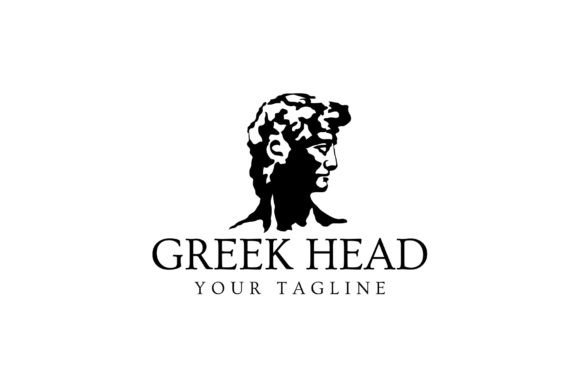
Greek Head Logo Vector Icon Illustration Review
When I first opened the Greek Head Logo Vector Icon Illustration, my immediate reaction wasn't about the file format or the technical specs. It was about the vibe. There is a distinct weight to this design, a sense of history and authority that doesn't scream for attention but commands respect once you look at it. As someone who has spent years turning digital files into tangible, stitched masterpieces for clients ranging from boutique owners to craft fair hobbyists, I know that not every vector icon translates well to thread. Some designs look great on a screen but fall apart under the needle. This one, however, feels like it was born for the hoop.
The concept of a Greek head—likely referencing classical busts or mythological figures—carries a specific aesthetic: timeless, elegant, and slightly academic. When evaluating this as an embroidery project, the mood it sets is crucial. It isn't a playful, cartoonish character suitable for a toddler's onesie in bright neon threads. Instead, it suggests sophistication. It fits naturally into projects where heritage, education, or classic style are central themes. Imagine a custom embroidered patch for a university alumni bag, a sophisticated logo on a leather apron for a pottery studio, or a subtle accent on a high-end tote bag for a bookstore. The visual personality here is serious yet approachable, making it a versatile asset for anyone building a brand with a touch of class.
From Screen to Stitch: Real-World Performance
Let's talk about the practical side of using the Greek Head Logo Vector Icon Illustration in a real production environment. The product description highlights that these are full vectors, fully editable, and scalable without losing resolution. This is the holy grail for machine embroidery designers. In the world of stitching, scalability is everything. You might start by embroidering a small version for a hat brim, only to realize later you need a larger version for a sweatshirt back or a large banner for a trade show. Because this design is vector-based, you can resize it freely before converting it to your embroidery software, ensuring that the curves remain smooth and the details don't pixelate or become jagged lines of thread.
I recently considered using this design for a custom line of tote bags intended for a local history museum shop. The challenge with any historical figure design is capturing the detail without creating a dense mess of stitches. If the stitch density is too high, the fabric puckers, and the fine lines of the face or hair lose definition. However, because this is a vector illustration, I could adjust the stitch angles and density parameters in my digitizing software before even sending it to the machine. The clean lines of the original graphic suggest that with proper digitization, the satin stitches would follow the contours beautifully, highlighting the profile of the head while the fill stitches would provide depth to the background elements.
For commercial embroidery projects, especially those sold on platforms like Etsy or at craft fairs, the perceived value of the finished product matters immensely. A well-executed Greek Head Logo Vector Icon Illustration elevates a simple cotton tote or a plain hoodie into a statement piece. Customers buying handmade goods are often looking for uniqueness and quality. Seeing a crisp, clear representation of a classical motif suggests that the maker put thought into the design selection. It builds trust. It tells the buyer, "This isn't just a random clip-art sticker; this is a curated, professional design." Whether it ends up on a baby blanket for a nursery themed around mythology or a kitchen towel for a home chef who loves history, the design adds a layer of intellectual charm that generic logos simply cannot match.
Navigating the Challenges of Embroidery
While the potential is high, we must be realistic about where this design should be used carefully. Not every surface is created equal. If you are planning to use the Greek Head Logo Vector Icon Illustration on a curved surface like a baseball cap, you need to pay close attention to how the design will distort. The human face is symmetrical and detailed; if the curvature of the cap causes the eyes or nose to stretch or compress, the likeness could be lost entirely. For curved surfaces, I always recommend testing the design on scrap fabric first to ensure the perspective holds up.
Texture is another factor that can make or break this project. On a smooth, tightly woven fabric like twill or poplin, the design will shine. The threads lay flat, and the details are sharp. However, on a heavily textured fabric like a chunky knit sweater or a rough burlap sack, the fine lines of the vector might get lost in the weave. Similarly, thin or stretchy fabrics require extra care. Without the right stabilizer, the tension of the embroidery machine could pull the fabric, warping the delicate features of the head. For these applications, a cut-away stabilizer is often necessary to maintain the structural integrity of the design after washing.
Another area to watch is the color palette. The product notes mention RGB colors, which means you will need to translate these digital hues into physical thread colors. RGB is light-based, while embroidery threads are pigment-based. A vibrant blue on the screen might translate to a muddy navy on the fabric if the wrong thread type is chosen. You must review the thread color contrast carefully. If the background of the design is dark and the details are light, you need to ensure there is enough contrast so the image doesn't disappear into the fabric. Testing the design in black and white mockups can help visualize how the values will interact once stitched.
Practical Notes for the Creative Entrepreneur
If you are an Etsy seller or a small business owner looking to incorporate this into your inventory, there are a few critical steps to take before you hit the 'start' button on your machine. First, confirm the licensing terms. Just because the file is editable doesn't automatically mean you have the right to sell finished products made from it. Check the specific license agreement provided with the download to ensure you are compliant with commercial use policies.
Once you have cleared the legal hurdles, focus on the technical setup. Since the product description mentions a font link in the notes, verify that you have access to the correct typeface if the design includes text. Using the wrong font can ruin the classical aesthetic instantly. Also, inspect the small details. Does the design include tiny lettering or intricate hair strands? These areas often require a smaller needle size and a finer thread to prevent breaking or clumping. If the details are too small for the hoop size you intend to use, consider simplifying the design or choosing a different application.
Finally, think about the end user. Will they wash the item frequently? If this is going on a daily-use apron or a child's clothing, the durability of the stitch density becomes paramount. Dense stitch areas can trap dirt and wear down faster than sparse areas. By testing the design on scrap fabric and running it through a wash cycle yourself, you can anticipate how the Greek Head Logo Vector Icon Illustration will hold up over time. This proactive approach saves returns and keeps your reputation intact.
In conclusion, the Greek Head Logo Vector Icon Illustration is more than just a graphic; it is a foundation for high-quality, meaningful embroidery work. Its vector nature gives you the flexibility to adapt it to various projects, from personalized gifts to boutique branding. While it requires careful consideration regarding fabric choice, stabilization, and color translation, the reward is a finished product that looks professional, timeless, and deeply crafted. For designers willing to put in the prep work, this design offers a fantastic opportunity to create items that stand out in a crowded marketplace.